Pittsburgh: Time to Make the Internet Open and Available to Everyone
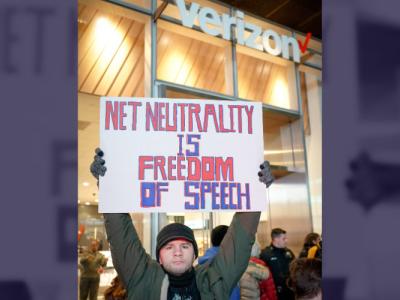
July 22nd, 2008 by tkarrThe Federal Communications Commission needs to help keep the Internet free of corporate gatekeepers and available to every American, witnesses and the public told the agency’s five commissioners at a hearing last night in Pittsburgh.
“I believe so strongly in an open internet for everyone,” said Rep. Mike Doyle, who was instrumental in organizing the hearing. “That’s why, as Vice-Chairman of the Subcommittee on Telecommunications and the Internet in the House Energy and Commerce Committee, I’ve been working to develop federal policies that keep the Internet open.”
Adelstein: Don’t let old media control the Internet
|
Doyle said the hearing should address two leading concerns: bridging the “digital divide” so that all Americans “can compete in a global economy,” and Net Neutrality — preventing Internet gatekeepers from filtering, blocking or spying on legal content.
Not Another Version of Old Media
“Consumers don’t want the Internet to become another version of old media — dominated by a handful of companies. They want choice,” FCC Commissioner Jonathan Adelstein told the more than 250 people in attendance Monday night.
Adelstein spoke about the increasing use of video by millions of people, pointing to the popularity of YouTube and other online video services.
“The FCC needs to continue to promote bandwidth capacity to make the next generation of using the Internet possible,” he said.
To get there, Adelstein and others have been pushing for a national broadband plan that involves private-public partnerships to “incentivise this build out and make sure that our networks are open and neutral.”
No Gatekeepers
The FCC should take immediate action against network providers that block or filter access to online applications, said Marge Krueger of the Communications Workers of America.
Earlier this month FCC Chairman Kevin Martin announced his intention to take action against cable giant Comcast for illegally violating Net Neutrality, after a coalition of Net users and activists caught the cable giant blocking open access to the Internet.
And just last week, bipartisan members of the House Subcommittee on Telecommunications and the Internet blasted companies like NebuAd that seek to work with ISPs to spy on user’s Internet activity without first seeking consent.
CWA’s Krueger joined other speakers and members of the audience in calling for a comprehensive broadband policy that would help restore America’s flagging leadership in broadband services and availability
The Dimensions of the Divide
America’s digital divide is delineated by class, location and race. Only 35 percent of American homes with less than $50,000 in annual income have broadband, according to the Census Bureau, while 76 percent of households earning more than $50,000 per year are connected.
Meanwhile nearly 20 million Americans live in areas not served by a single broadband provider, while tens of millions more live in places with just a single source for high-speed Internet. Just 39 percent of rural households subscribe to broadband service, compared to 54 percent of urban dwellers.
Finally, only 40 percent of minority households subscribe to broadband, while 55 percent of non-Hispanic white households are connected.
“We need specialized policies and technologies that target those underserved regions” said Professor Rahul Tongia of Carnegie Mellon University. Tongia pointed to the need for changes in laws on “white spaces” and “open access” to get more people connected in regions that are still off the grid.
Broadband a ‘Civil Right’
Commissioner Michael Copps said he found it hard to believe that people were still arguing against a comprehensive broadband policy for universal and open access.
“I am unaware of any infrastructure build out in the history of this country that hasn’t been accomplished without a public or private sector partnership and a national strategy … to get broadband out to all of its people,” Copps said.
“I think it’s a civil right; I really do,” he said. “The need to chart a path to the realization of that right is why we’re here today.”
“And we’re still sitting here saying, ‘Should there be a strategy?’ ”
(Photo Courtesy of Jake Warga, Flickr)